
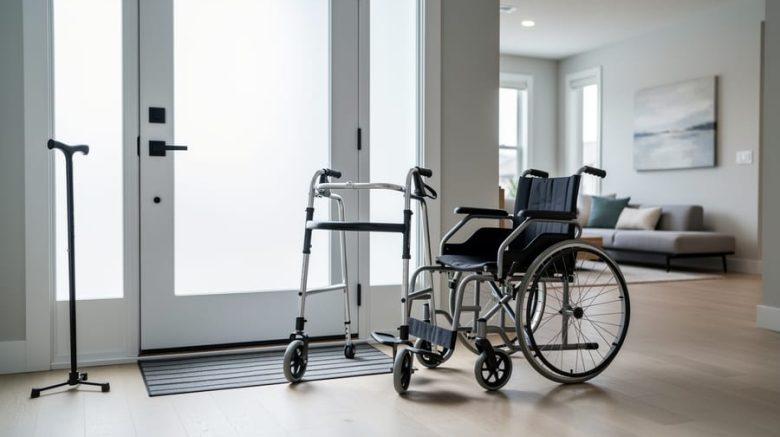
Living with arthritis or recovering from surgery shouldn’t mean giving up the independence to move through your home and community with confidence. Calgary residents have access to a comprehensive range of mobility aids, from simple walking canes to advanced stairlifts and power wheelchairs, with local providers offering rental options, in-home consultations, and professional installation services tailored to both short-term recovery needs and long-term mobility solutions.
Choosing the right mobility aid depends on your specific challenges. Someone managing early-stage arthritis pain might find stability with a cane, while others dealing with advanced joint damage may need the full support of a walker or wheelchair. The good news? You don’t have to navigate these decisions alone or commit to purchasing expensive equipment before you’re certain it’s the right fit.
Local Calgary providers understand that mobility needs change. A knee replacement might require crutches for six weeks, while progressive arthritis calls for long-term solutions. That’s why short-term and long-term rental options have become standard across most locations in the city, allowing you to test equipment, accommodate visiting family members, or bridge the gap during recovery without the upfront investment of a purchase.
The following list covers ten essential mobility aids available in Calgary, from basic walking supports to sophisticated home accessibility installations, with practical guidance on what each option offers and how to access it locally.
How We Selected These Mobility Aids
We compiled this list by focusing on mobility aids that make the biggest difference for people living with arthritis and other mobility challenges in Calgary. Our selection prioritizes equipment that supports safer movement and independence, from basic walking strategies using simple aids like canes to advanced home accessibility installations like stairlifts and vertical platform lifts.
Availability mattered. We included aids you can actually access through local Calgary providers who offer consultations, installation services, and both rental and purchase options. Many of these items appear on the NIHB mobility equipment and supplies benefits list, which can help reduce costs if you qualify for coverage.
The range reflects real-world needs: some people need temporary support during a flare-up, while others require permanent solutions. That’s why we cover everything from crutches you might rent short-term to installed equipment that transforms your home for the long haul.
1. Canes: Your First Step Toward Stability
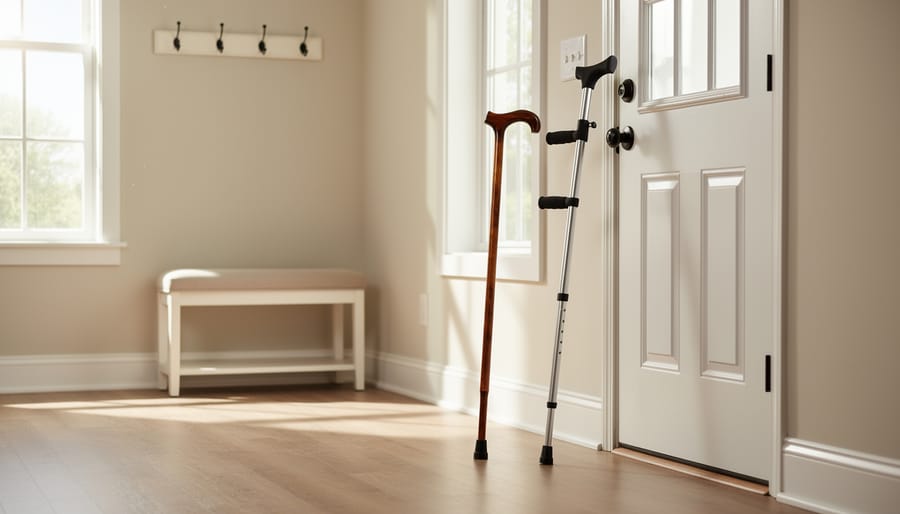
A cane is often the first mobility aid people with arthritis consider, and for good reason. It provides an extra point of contact with the ground, reducing pressure on hips and knees by redistributing some of your body weight through your arm. That simple shift can make a real difference when arthritis flares or when you’re navigating uneven surfaces.
The handle type affects how weight transfers and how comfortable the cane feels during extended use. A derby handle curves to fit your palm and works well for those who need light support and have good grip strength. An offset handle positions your weight directly over the shaft, offering better stability and less wrist strain, particularly helpful if you have arthritis in your hands. Quad-base canes feature four small feet instead of one, creating a wider base that stands independently and provides extra stability for those with significant balance concerns.
Different cane styles serve different needs:
- Single-point cane: lightweight and portable, best for mild balance issues or occasional support
- Quad cane: freestanding with a four-point base, ideal for those who need more stability or have one-sided weakness
- Offset handle cane: weight centered over the shaft, reduces wrist strain and works well for arthritis in hands
- Derby handle cane: traditional curved grip, suits those with strong grip who need light support
Canes are covered under NIHB mobility equipment benefits, which can ease the financial aspect of getting the support you need. Managing mobility challenges already creates enough stress and arthritis symptoms often worsen under stress, so reducing barriers to accessing aids matters. Calgary providers stock various cane types and can help you find the right fit for your height and needs.
2. Walkers: Enhanced Support for Everyday Movement
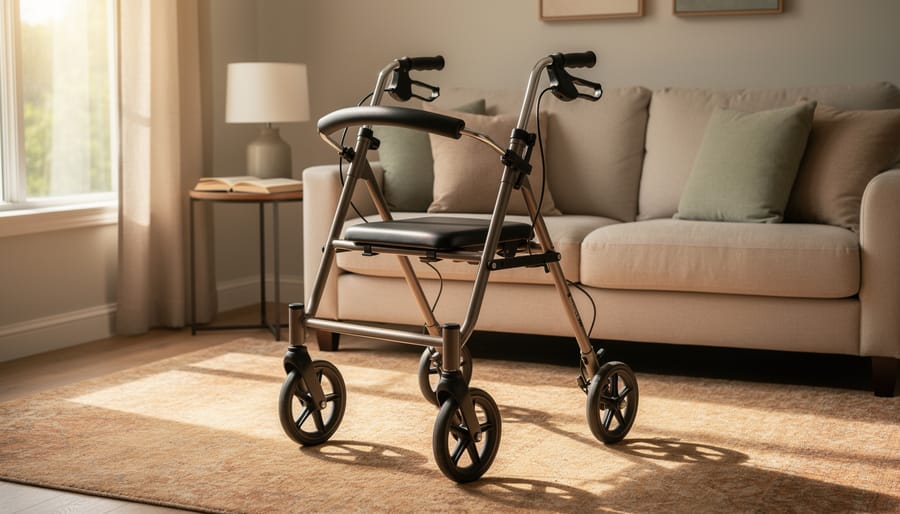
Walkers provide a step up in stability and support for people whose arthritis or balance challenges make a cane insufficient. Standard walkers have four legs and require you to lift the frame with each step, which builds upper body strength but can be tiring for those with wrist or shoulder arthritis. Rolling walkers, called rollators, are often more practical for everyday use because their wheels let you push the frame forward smoothly without lifting.
Most rollators come with hand brakes, a padded seat, and a storage basket. The seat becomes invaluable when arthritis flare-ups strike mid-outing, you can rest without searching for a bench, turning a potentially exhausting trip into a manageable one. Baskets carry groceries or a purse, freeing your hands to grip the walker properly. Hand brakes give you control on slopes and let you stop safely, which matters in Calgary’s hilly neighborhoods.
For people with arthritis, walkers transform daily activity from risky to sustainable. The four-point contact distributes your weight evenly, reducing stress on inflamed hips and knees. That stability encourages you to stay active, which keeps joints mobile and muscles strong, both critical for managing arthritis long-term.
Walkers appear on the NIHB mobility equipment and supplies benefits list under walking aids, making them covered items for eligible individuals. Calgary providers like Mobility Plus and Motion offer both purchase and rental options, allowing you to trial a rollator before committing or rent one during a recovery period when your needs may change.
3. Crutches: Temporary or Long-Term Mobility Support
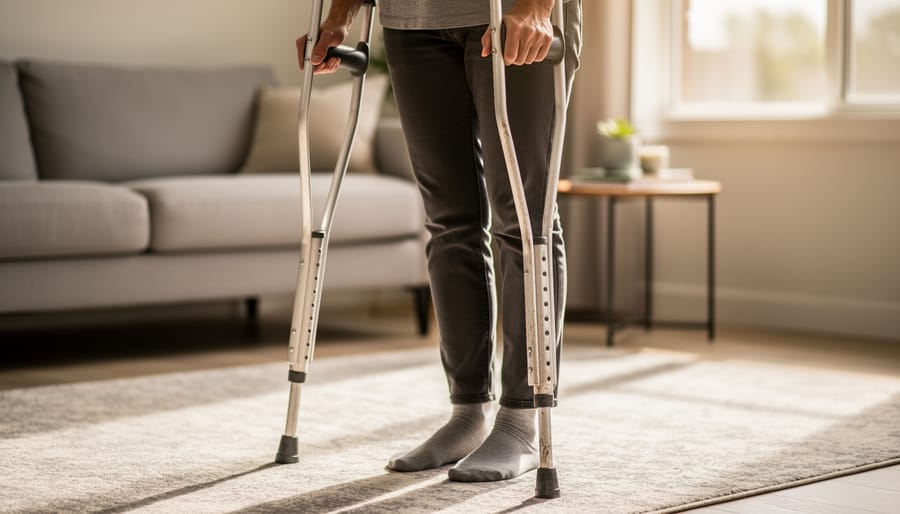
Crutches offer crucial support when you need to take weight off one or both legs, whether during an arthritis flare-up or while recovering from an injury or surgery. The two main types serve different needs: underarm crutches distribute weight through the armpits and hands, while forearm crutches (also called Lofstrand crutches) use a cuff around the forearm and are often easier on the upper body for extended use.
For people living with arthritis, crutches help manage partial weight-bearing situations that might otherwise prevent movement. During particularly painful flare-ups in your knees, hips, or ankles, crutches let you stay mobile while reducing stress on inflamed joints. They can mean the difference between resting in one spot all day and maintaining your independence around your home and community.
While many people think of crutches as strictly temporary equipment, some individuals with chronic arthritis conditions use them long-term to manage variable symptoms. You might need them only during certain seasons or activities, or rely on them more consistently depending on how your condition progresses.
Under the NIHB mobility equipment and supplies benefits list effective July 29, 2026, crutches are covered as walking aids. This makes them accessible for those who qualify and need assistance managing their mobility challenges without the upfront cost burden.
4. Manual Wheelchairs: Versatile Mobility for Varying Needs
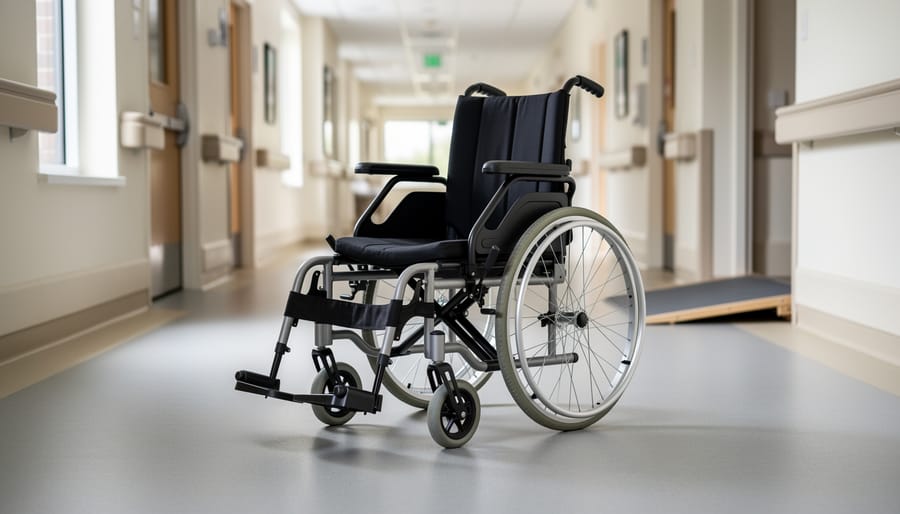
Manual wheelchairs come in three main types, each suited to different situations and capabilities. Standard manual wheelchairs are durable, heavy-duty options for full-time use, while lightweight wheelchairs (typically under 35 pounds) are easier to propel and transport, making them ideal for people with arthritis who need to conserve upper body energy. Transport chairs, with smaller wheels, are designed for pushing by a caregiver rather than self-propulsion, helpful during severe flare-ups when arm and hand strength is limited.
The right manual wheelchair can work well for arthritis patients who retain some upper body strength and want control over their movement, especially for indoor use and shorter distances. Modern manual chairs offer features like adjustable armrests, swing-away footrests, and cushioned seats that reduce joint stress. However, choosing the wrong size or style can worsen arthritis symptoms rather than relieve them.
Calgary providers like Mobility Plus and Motion offer wheelchair consultations to match your needs with the right model. Since the NIHB mobility equipment and supplies benefits list (effective July 29, 2026) covers wheelchairs, wheelchair parts, accessories, and servicing, many people can access these aids through their benefits. Both providers also stock replacement parts and offer maintenance services, ensuring your chair remains safe and functional as your needs evolve.
5. Power Wheelchairs: Motorized Independence
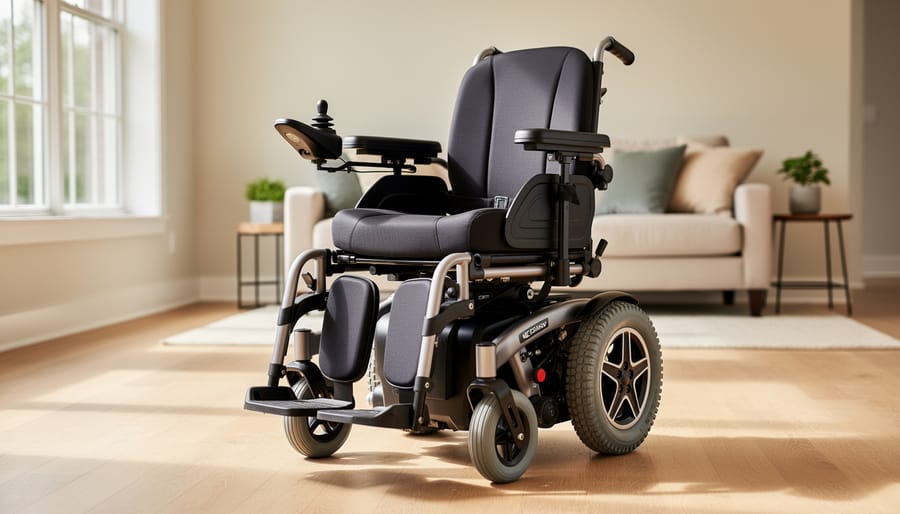
Power wheelchairs represent a significant step up in mobility support, designed for people whose arthritis or other conditions make self-propulsion difficult or impossible. Unlike manual chairs that require arm strength to operate, power wheelchairs use battery-powered motors controlled by a joystick or other adaptive interface. For those with severe joint involvement in hands, wrists, shoulders, or hips, these motorized options restore independence that manual chairs simply can’t provide.
Modern power wheelchairs come with features that go far beyond basic movement. Programmable controls let you adjust speed settings, acceleration, and turning sensitivity to match your comfort level and environment, slower, more precise movements indoors, faster speeds for outdoor use. Many models include tilt-in-space and recline functions that shift your weight throughout the day, reducing pressure on joints and preventing skin issues during extended sitting. Some chairs offer powered leg rests and seat elevation, allowing you to reach higher shelves or engage in conversation at eye level.
Customization matters enormously with power wheelchairs. Seat width, depth, back height, armrest style, and footrest positioning all affect comfort and function. The wrong fit can worsen arthritis symptoms or create new pressure points.
Calgary providers like Mobility Plus and Motion offer consultations, both in-person and virtual, to help determine the right configuration for your body and lifestyle. These assessments consider your home layout, transportation needs, daily activities, and how your condition might change over time. Power wheelchairs are included in the NIHB mobility equipment and supplies benefits list, so coverage may be available depending on your situation.
6. Mobility Scooters: Extended Range for Active Living
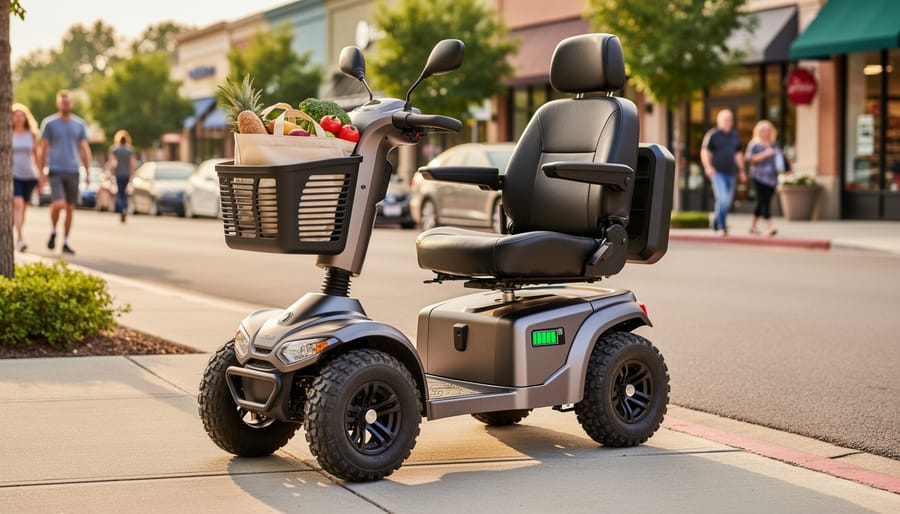
Mobility scooters bridge the gap between walking aids and wheelchairs, offering independence for those who can’t walk long distances but don’t need full-time wheelchair support. They’re particularly valuable for people with arthritis who want to maintain an active lifestyle, shopping trips, outdoor excursions, and community activities become accessible again.
Three-wheel scooters offer a tighter turning radius, making them ideal for indoor use and navigating crowded spaces like grocery stores. Four-wheel models provide greater stability outdoors, handling uneven sidewalks and Calgary’s variable weather conditions more confidently. Most scooters support weight capacities between 250 and 350 pounds, though heavy-duty models go higher.
Battery range matters significantly. Standard scooters typically travel 10 to 15 kilometres per charge, sufficient for neighbourhood trips and errands. Extended-range models can reach 25 kilometres or more, opening up possibilities for longer outings without range anxiety. Consider where you’ll use your scooter most, daily neighbourhood routes versus occasional full-day adventures, when selecting battery capacity.
Storage presents a practical consideration many overlook. Some scooters disassemble into portable pieces that fit in a car trunk, while others require vehicle lifts or remain at home. Think about whether you need to transport your scooter regularly.
Calgary providers like Mobility Plus and Motion offer both purchase and rental options. Renting works well for seasonal use, perhaps just during Calgary’s milder months, or trial periods before committing to a purchase. Short-term and long-term rental options are available at most Mobility Plus locations, giving you flexibility as your needs evolve.
7. Stairlifts: Making Multi-Level Homes Accessible
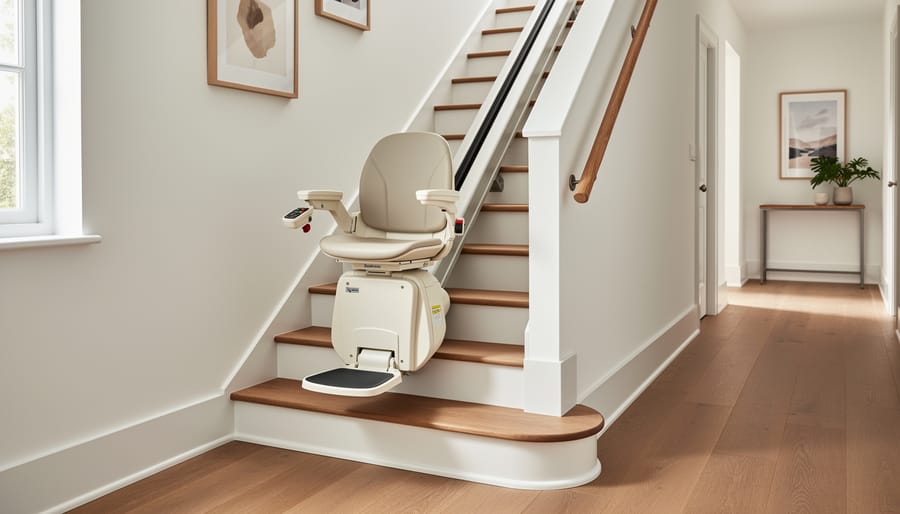
Stairlifts transform multi-level homes into accessible spaces, allowing people with arthritis and mobility challenges to move between floors safely rather than facing the difficult choice of relocating or staying confined to one level. A straight stairlift runs along a single, uninterrupted staircase and works well for most homes. Curved models navigate turns, landings, or custom staircases, making them suitable for unique layouts. Both types feature a motorized seat that glides along a rail mounted to the stairs, controlled by simple armrest buttons or wall switches.
For arthritis patients who struggle with knee or hip pain, stairs often become a daily barrier. A stairlift eliminates the physical strain and fall risk, preserving independence and reducing joint stress during what would otherwise be a painful task.
Calgary providers like Mobility Plus and Motion offer in-home installation services, bringing equipment and expertise directly to your residence. Technicians assess your staircase, recommend the right model, and handle the complete setup. This professional approach ensures proper fit and safe operation.
You can purchase a stairlift as a permanent solution or rent one for short-term recovery following surgery or during a temporary mobility setback. Rental options give you flexibility if your needs might change, while purchase makes sense for long-term accessibility. Both Mobility Plus and Motion provide consultation services to help you decide which path suits your situation and budget.
8. Power Lift Recliners: Comfortable Assistance with Sitting and Standing
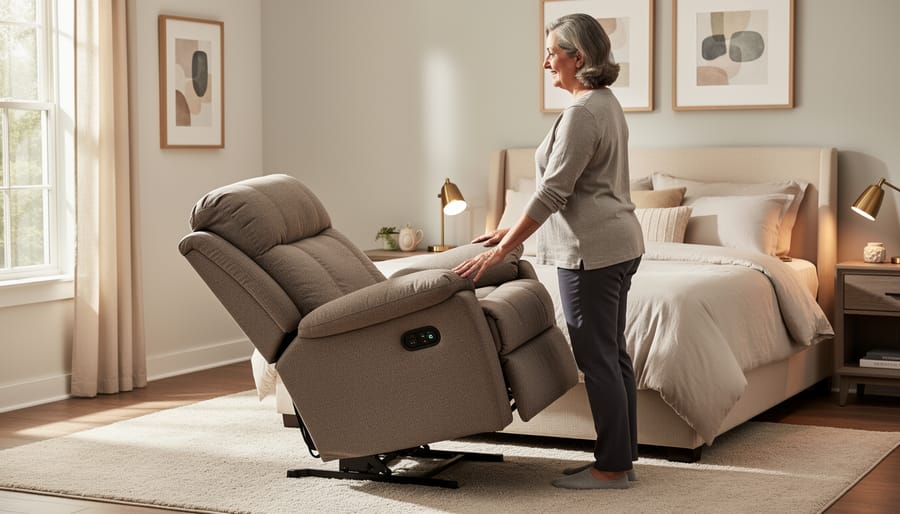
Power lift recliners offer a practical solution for arthritis patients who find it painful or difficult to transition between sitting and standing. These specialized chairs use a motorized mechanism to gently tilt forward and lift you to a near-standing position, reducing the strain on hips, knees, and lower back joints that typically bear the load during these movements.
For someone with arthritis, the daily challenge of getting out of a chair can limit activity and independence. Power lift recliners address this by doing the heavy work for you. Most models also include multiple reclining positions controlled by a simple remote, allowing you to find comfortable angles that reduce pressure on inflamed joints throughout the day.
Calgary providers like Motion offer power lift recliner chairs as part of their home accessibility solutions, recognizing that bedroom and living space modifications often make a significant difference in daily comfort. These chairs come in various sizes and upholstery options to match your home’s décor while providing the functionality you need.
When considering a power lift recliner, think about where you spend most of your sitting time. Placing one in your main living area creates a comfortable, safe spot for reading, watching television, or simply resting between activities, while the lift function ensures you can get up independently when you’re ready to move.
9. Ramps: Smooth Access In and Out of Home
Steps and thresholds can turn your own home into an obstacle course. Modular ramps solve this problem by creating smooth, gradual inclines that wheelchairs, walkers, and scooters can navigate easily. Unlike permanent concrete ramps, modular systems consist of interlocking sections that fit your specific entrance configuration, whether you need a straight path or one with turns and platforms.
Modular ramps work well for both temporary and long-term situations. If you’re recovering from surgery or an injury flare-up, you can rent a ramp for a few months and have it removed when you no longer need it. For permanent accessibility needs, these same systems provide durable, weather-resistant solutions that can be relocated if you move. The aluminum construction resists Calgary’s temperature swings and winter conditions without warping or cracking.
Calgary providers like Mobility Plus offer in-home installation of modular ramps, handling the assessment, configuration, and setup so you don’t need to worry about measurements or assembly. Rental options exist for short-term recovery situations, giving you flexibility without the upfront cost of ownership. Whether you need to access a front entrance, back deck, or garage, a properly installed ramp eliminates the physical strain and fall risk that steps create for people with arthritis and mobility challenges.
10. Vertical Platform Lifts: Solutions for Challenging Entrances
When you face height differences of several feet at your home’s entrance, or when the space available won’t accommodate a safe ramp slope, a vertical platform lift offers a practical solution. These lifts work like small elevators, raising and lowering a platform that accommodates wheelchairs, scooters, or walkers to bridge vertical gaps safely.
Indoor models typically handle heights up to 14 feet and fit into tight spaces near interior staircases or split-level transitions. Outdoor versions are weatherproof and designed for porch access, raised decks, or garage entries where steps create barriers. Both types feature safety rails, non-slip platforms, and emergency stop controls.
For wheelchair users and those who manage arthritis in multiple joints, vertical lifts eliminate the physical strain of navigating steep ramps or asking for assistance at every entrance. Calgary providers like Mobility Plus offer in-home installation services for these systems, ensuring proper placement and safe operation tailored to your specific entry challenges.
While vertical platform lifts represent a larger investment than simpler aids, they can help you manage care costs by keeping you safely in your home rather than requiring a move to accessible housing. Some people combine platform lifts with natural therapies and other mobility supports as part of a comprehensive independence plan.
Understanding Rental Versus Purchase Options in Calgary
Deciding whether to rent or purchase a mobility aid depends on how long you’ll need it and how your situation might evolve. Calgary providers offer both short-term and long-term rental options at most locations, giving you flexibility to match the equipment to your current needs.
Renting makes sense when you’re recovering from surgery or an injury and expect your mobility to improve within weeks or months. It’s also practical for trying out equipment before committing to a purchase, many people rent a mobility scooter or power wheelchair first to see how it fits their daily routine. If your arthritis symptoms fluctuate seasonally or you only need certain aids part of the year, rental can be more cost-effective than buying equipment that sits unused.
Purchasing becomes the better choice when you need long-term support and have found the right equipment through consultation and trial use. Owning your walker, wheelchair, or stairlift means you can customize it fully and avoid ongoing rental fees. Many Calgary providers work with benefit programs that may cover purchase costs, making ownership more accessible than you might expect.
Your needs may change as arthritis progresses or improves. Starting with rental lets you adjust your equipment without the commitment, then transition to purchase when you’ve identified exactly what works.
Coverage and Benefits: What You Should Know
Understanding your coverage options can make mobility aids significantly more affordable and accessible. Many of the aids discussed in this guide qualify for benefits under programs like the Non-Insured Health Benefits (NIHB), which can substantially reduce or eliminate your out-of-pocket costs.
The NIHB mobility equipment and supplies benefits list, effective July 29, 2026, covers a comprehensive range of aids. This includes seating devices, standing devices, walking aids like canes and walkers, crutches, medical strollers, wheelchairs (both manual and power), wheelchair parts, accessories, and ongoing servicing. If you have coverage through NIHB or other health benefit programs, many items on this list may already be covered.
Beyond federal programs, check whether your private insurance, employer benefits, or provincial assistance programs cover mobility equipment. Coverage varies widely, so review your policy details or speak directly with your benefits coordinator.
Working with Calgary providers who understand benefit programs makes the process smoother. They can help verify what’s covered, submit necessary documentation, and navigate approval processes. Don’t assume you can’t afford the mobility aid you need, explore your coverage first and ask providers about payment options that work with your specific situation.
Frequently Asked Questions About Mobility Aids in Calgary
Many Calgary residents have practical questions when they start exploring mobility aids. Here are answers to some of the most common concerns.
Can I try equipment before buying?
Yes, many Calgary providers offer consultations and trial opportunities so you can test equipment before making a purchase decision. Both Mobility Plus and Motion provide in-person and virtual consultations to help you find the right fit for your needs.
Are installation services available in Calgary?
Yes, in-home installation services are available for equipment like stairlifts, modular ramps, and vertical platform lifts. Providers like Mobility Plus and Motion bring the equipment to your home and handle professional installation as part of their service.
What if my needs change over time?
Rental and service options provide flexibility as your mobility needs evolve. Short-term and long-term rental programs let you adjust equipment without a major financial commitment, and providers can reassess your situation and recommend different aids when circumstances change.
How do I know which mobility aid is right for me?
A professional assessment is the best starting point. Calgary providers offer both virtual and in-person consultations where trained specialists evaluate your specific mobility challenges, living environment, and daily activities to recommend appropriate solutions.
Taking advantage of consultation services removes much of the guesswork from choosing mobility aids. Providers understand that selecting the right equipment is a personal decision that depends on your unique situation, and they’re equipped to guide you through the options available in Calgary.
Finding the right mobility aid can transform your daily life, turning challenging tasks into manageable ones and restoring the independence that arthritis or mobility conditions may have affected. The options available in Calgary span from simple walking aids to sophisticated home accessibility equipment, ensuring there’s a solution for every stage of your journey.
Take advantage of the consultation services offered by local Calgary providers. Whether you prefer in-person visits or virtual assessments, these professionals can help you identify the equipment that truly matches your needs and lifestyle. Don’t hesitate to ask about trial periods or rental options if you’re uncertain about committing to a purchase.
Remember that mobility aids aren’t signs of weakness or decline. They’re practical tools that empower you to stay active, maintain your routines, and continue doing what you love. Whether you need short-term support during a flare-up or a long-term solution to adapt your home, Calgary providers have the equipment and expertise to help you move forward with confidence.