

Before you order from any peptide supplier, such as Kylo Canada ask six things: what purity the product reaches and how it was tested, whether a batch-specific certificate of analysis (COA) comes from an independent lab, where the material was made, how it’s stored and shipped, what the return and support policies are, and whether the company states plainly that its products are for research use only. A supplier who answers these quickly and in detail is worth your time. One who dodges them isn’t.
Good vetting takes about an hour and saves weeks of wasted work and budget. Any source, Kylo Canada included, should go through this same checklist, because no supplier should earn trust on a polished website alone.
If you’re reading this on a site focused on arthritis, a note on scope. Research-grade peptides are laboratory materials, not approved treatments, and nothing here is a recommendation to use them on yourself. If you’re still working out whether joint pain points to arthritis, start with how to know if you have arthritis and learn how doctors diagnose it. Personal care decisions belong with your healthcare team.
For researchers, lab staff, and informed buyers, the questions below turn a vague sense of “this seems legitimate” into a checklist you can actually use.
Why Supplier Vetting Matters for Research Quality and Safety

A peptide is only as reliable as the vial it arrives in. Two suppliers can sell a compound with the same name and deliver very different things, and that difference decides whether a study produces results you can trust.
Think about what can go wrong. A product might be less pure than its label claims. It could be mislabeled, contain traces of leftover manufacturing chemicals, or arrive degraded after sitting in the heat during shipping. Any one of these can quietly skew an experiment. Researchers then lose weeks of work, and often limited funding, chasing results that were never valid to begin with.
This matters to our community because the Arthritis Community & Network is built on evidence-based, research-backed information. Good evidence starts with good materials. When researchers and informed buyers ask careful questions up front, they protect the quality of the science that people living with arthritis are counting on.
It also helps to be clear about what research-grade materials are. They’re made for laboratory study, not for treating anyone. That’s a different category from approved medications, which go through extensive testing and oversight.
Nothing here suggests that any particular peptide can help with arthritis. The point is simpler: if you work with research materials, vetting your supplier is one of the most practical ways to keep your work credible and careful.
Key Buying Factors: The Questions That Reveal a Supplier’s Quality
Purity and Testing: Can You Show Me the Proof?

Start with the most direct question you can ask: can you show me the proof? A trustworthy supplier should welcome it. Purity claims on a website mean very little until a testing report backs them up, so ask who did the testing and how.
Two methods come up most often. HPLC (high-performance liquid chromatography) separates a sample into its components and shows what percentage is the peptide you want versus leftover byproducts. Mass spectrometry weighs the molecules, which confirms the peptide is actually the compound on the label. Purity and identity are different questions, and you need both answered.
Then ask about frequency and independence. Testing every batch is far more reassuring than occasional spot checks, because quality can shift from one production run to the next. And a lab that is separate from the supplier has no stake in the result, which makes its report more credible.
Here is a quick checklist you can bring to any supplier conversation:
- Is each batch tested, or only some of them?
- Is the testing lab independent of your company?
- Which methods do you use for purity (HPLC) and identity (mass spectrometry)?
- What purity percentage do you guarantee, and in writing?
- Can I see the full report for the exact batch I’m ordering?
Keep the answers in writing. Clear, specific replies are a good sign, while vague or hurried ones are worth noting before you go any further.
Certificates of Analysis and Batch Traceability

A Certificate of Analysis, or COA, is a document that reports the test results for a specific batch of peptide. The key word is specific. A COA only means something if it belongs to the exact lot you’re ordering, so your first question should be: “Can I see the COA for this batch before I buy?”
Next, ask how you can confirm the document is real. A trustworthy supplier will tell you which laboratory ran the tests, how to contact that lab, and whether the lab can confirm the report on request. Ask, too, whether the lot number printed on the vial will match the lot number on the COA. If a supplier can’t explain how a vial links back to its paperwork, you have no real way to trace what you received.
Look closely at what arrives. A solid COA lists the testing lab, the test date, the lot number, the methods used, and the actual results. Be cautious if it looks generic, with no lot number, no date, or details that could describe any product. Mismatched fonts, blurry logos, cropped sections, or numbers that seem pasted in can all suggest editing. A single odd detail may have an innocent explanation, so ask about it. Vague or defensive replies are worth noting.
Save every COA with your order records. If questions come up later, that paper trail protects the integrity of your work.
Sourcing, Manufacturing, and Compliance
Knowing where a peptide comes from tells you a lot about how much to trust it. A reputable supplier should be able to say plainly who manufactures the material, in what country, and whether they make it themselves or buy it from a third party. If the answer is “we can’t share that,” treat it as a warning sign rather than a minor inconvenience.
Next, ask about quality standards. Does the manufacturer follow good manufacturing practices (GMP), which are recognized guidelines for consistent, clean, well-documented production? Is the facility certified under a quality management system such as ISO 9001? A supplier doing careful work will usually welcome these questions and answer them specifically. Vague phrases like “high quality” or “lab tested” are not the same as documented standards.
Compliance matters just as much. Ask how the supplier handles legal and regulatory requirements, including whether they clearly label products as research-use-only, whether they verify the buyer’s affiliation, and how they manage export and import rules. Be cautious of anyone who skips these steps entirely.
Finally, check your own side of the equation. Rules on buying research materials vary by institution and jurisdiction, so confirm what your organization’s compliance office or purchasing department requires before you order. A quick conversation upfront can save you from delays, wasted funds, or compliance problems later.
Storage, Shipping, and Handling
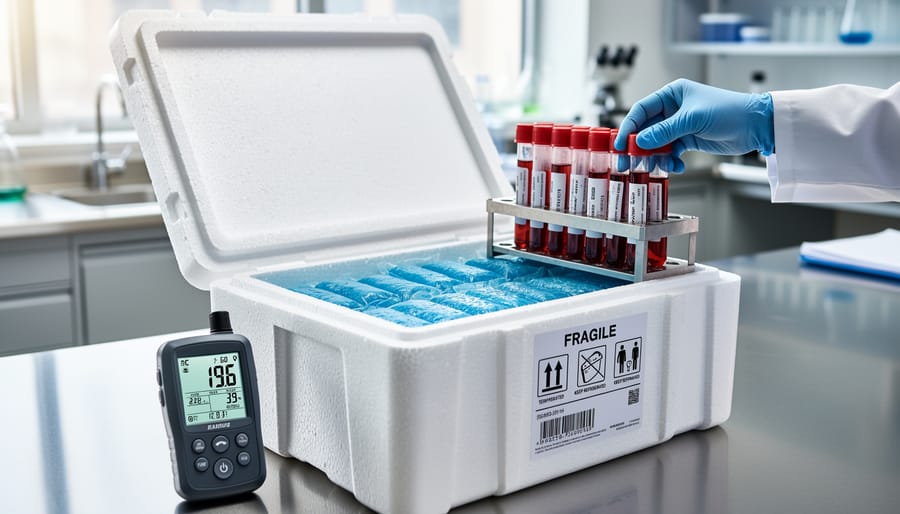
Even a well-made peptide can arrive compromised if it’s stored or shipped poorly, so ask what happens to the material between the lab and your door.
Start with storage before shipping. Ask whether the supplier keeps inventory refrigerated or frozen, and for how long it sits before dispatch. Then ask whether the product ships lyophilized, which means freeze-dried into a stable powder. Lyophilized peptides generally hold up far better than ones already dissolved in liquid, because water speeds up chemical breakdown.
Next, ask how temperature is managed in transit. A good supplier can explain whether they use insulated packaging, cold packs, or other protection, and how they handle shipping during hot weather or delays. Heat can break peptide bonds and change a compound’s structure, while moisture can trigger clumping and degradation, even in a sealed vial that’s been exposed to humidity.
Finally, ask about packaging and shelf life. Look for tightly sealed vials, clear lot labeling, and written guidance on recommended storage temperature, stability, and expiration. If the answers are vague, that tells you something about their handling standards. A careful supplier will welcome these questions and answer them in writing.
Transparency, Support, and Policies
A supplier’s willingness to be open tells you a lot before you ever place an order. Start by sending a pre-sale question by email and noting how quickly and clearly they reply. A company that answers with specifics, such as batch details or testing information, is usually one that will stand behind its product later. Slow, vague, or scripted replies are worth taking seriously.
Next, ask what happens if something goes wrong. Request their return and replacement policy in writing, especially for vials that arrive damaged, leaked, or test outside the stated specifications. Good suppliers explain how to report a problem, what evidence they need, and how long a resolution takes.
Check the label, too. A vial should list the compound name, lot number, quantity, and clear storage guidance. Missing or inconsistent labeling makes batch traceability impossible.
Watch closely for health claims. A reputable research supplier does not promise relief, cures, or arthritis benefits, because these products are for laboratory research only. Treatment language is a warning sign, not a selling point.
Finally, look beyond the supplier’s own site. Search for independent reviews on neutral forums and research communities, and check how long the company has operated, whether it lists a real business address, and how it handles complaints.
Types of Suppliers Compared: Where Research Peptides Come From
Not every supplier works the same way, and knowing the main categories helps you decide which questions matter most. Here is a neutral look at the four common sources. These are general patterns, not rules, and individual suppliers within any category can vary widely.
| Supplier type | Typical documentation | Customization | Cost level | Key consideration |
|---|---|---|---|---|
| Custom synthesis lab | Batch-specific COA, often with HPLC and mass spectrometry data | High (sequence, length, purity grade, modifications) | Moderate to high | Confirm turnaround time and what testing is included |
| Established catalog company | Standard COA, lot numbers, product data sheets | Low to moderate | Moderate | Check that the COA matches your exact lot |
| Reseller or marketplace | Varies from detailed to none | Usually none | Often lowest | Trace the true manufacturer and verify every document |
| University or institutional core facility | Detailed internal records and quality reports | Moderate to high | Varies by institution | Access may be limited to affiliated researchers |
Custom synthesis labs build a peptide to your specifications, which is helpful when you need a particular sequence or modification. Because they make the material themselves, they can usually explain exactly how it was produced and tested. Catalog or research-chemical companies sell ready-made products, which is convenient and often well documented, though you have less flexibility.
Resellers and marketplaces deserve the most careful questioning. A reseller may not make the product at all, so the person answering your email might not know how it was manufactured or stored. That does not make every reseller a poor choice, but it does mean you should ask who the original manufacturer is and request documentation tied to your specific batch.
Core facilities at universities or research institutions often offer strong transparency and oversight, especially for affiliated labs. If your institution has one, it can be a reassuring place to start.
Whichever route you take, remember that these materials are for laboratory research only, and any personal health decisions belong in a conversation with your healthcare team.
Recommendations: A Step-by-Step Approach to Vetting Before You Order
A good vetting process doesn’t need to be complicated. It just needs to be repeatable, so you can apply the same steps every time you consider a new supplier. Here is a simple approach many careful researchers find empowering.
Start by writing down your questions before you contact anyone. Use the checklist from earlier in this guide so nothing gets forgotten in the moment. Next, send those questions by email rather than asking over the phone. A written reply gives you a documented record of what the supplier promised about purity, testing, storage, and policies, and it’s far harder for a vague answer to slip by.
Request the Certificate of Analysis and testing details for the exact batch you’re considering, then compare at least two suppliers side by side. Seeing how each one responds, in tone, speed, and specificity, often tells you as much as the paperwork does.
If your project allows it, consider starting with a small test order before committing to a larger purchase. When possible, verify results independently, whether through your institution’s analytical resources or a separate testing lab. Keep all of it together: emails, COAs, lot numbers, receipts, and storage notes.
Throughout, lean on the people around you. Institutional compliance staff and a research mentor can confirm what’s permitted, flag concerns you might miss, and help you feel confident in your decisions. The same spirit applies to personal health: just as we encourage people to manage arthritis with support from their care team and evidence-based self-care good research thrives on guidance, documentation, and patience.
Mistakes to Avoid and Red Flags That Should Give You Pause
Even careful buyers slip up, and most mistakes share one root: moving faster than the evidence allows. Here are the ones worth watching for.
Choosing on price alone. A bargain can mean skipped testing, poor storage, or a different compound than the label claims. A cheap order that ruins your results costs far more than a fair price.
Accepting a COA at face value. A Certificate of Analysis only helps if it matches your batch. Check the lot number against the vial, look for a date, and confirm the lab is independent. Generic or edited-looking documents deserve a second look.
Overlooking storage and shipping. Heat and moisture can quietly degrade peptides. If a supplier can’t explain how product is stored and shipped, treat that silence as an answer.
Trusting treatment promises. Any supplier that claims a peptide cures, treats, or relieves arthritis is stepping outside research-grade territory. Credible sellers stick to documentation, not outcomes.
Skipping records and rushing past unanswered questions. Keep emails, batch numbers, and test results. If a supplier dodges a direct question, pause. Good ones welcome scrutiny.
If you live with arthritis, remember that research materials are not approved treatments, and no supplier’s claim replaces advice from your healthcare team. Careful, evidence-based bone research is moving the field forward, and it depends on buyers who ask hard questions first.
Frequently Asked Questions About Ordering Research Peptides
What is a Certificate of Analysis (COA)?
A COA is a document from a testing lab that reports what was found in a specific batch, usually including purity and identity results. Ask for one that matches the lot number on your vial, not a generic sample.
Does higher purity always mean better?
Not necessarily. A purity figure only tells you how much of the sample is the target peptide, and it means little without proof of identity, a named testing method, and a batch-specific report. A well-documented 98% can be more trustworthy than an unverified 99%.
How can I tell if lab results are genuine?
Look for a named, independent laboratory, a date, matching lot numbers, and the actual test data rather than just a summary. When in doubt, email the lab directly to confirm the report exists, and be wary of documents that look edited or identical across different products.
Are research peptides the same as prescribed medications?
No. Research-use materials are made for laboratory study and aren’t approved treatments or intended for human consumption. If you’re living with arthritis and wondering about options for your own care, please talk with your doctor or another qualified healthcare professional.
Asking these questions isn’t being difficult. It’s good practice, and a reputable supplier should welcome them. If an answer comes back vague or slow, treat that as useful information too, and keep a written record of every reply so you can compare suppliers fairly. Your institution’s compliance staff or a research mentor can also help you confirm what’s allowed in your location before you buy.
Choosing a peptide supplier doesn’t have to feel overwhelming. When you ask clear questions about purity testing, batch-specific documentation, sourcing, storage, and support, you protect the quality of your work and the credibility of everything built on it. A careful buyer is one of the quiet strengths of good research.
Keep your questions in writing, compare more than one supplier, and don’t let a polished website or a low price stand in for real proof. If an answer is vague, that tells you something. Pausing to ask again is part of doing this well.
Arthritis research moves forward because people are curious, careful, and willing to share what they learn. We’d love to hear what you’ve discovered, so bring your questions and experiences to the Arthritis Community & Network and keep the conversation going.
And for anything related to your own health or treatment, your healthcare team is the right place to start. Together, we can keep pushing for safe, credible progress.