

Physical activity isn’t just safe for rheumatoid arthritis, it’s one of the most powerful tools you have to manage pain, reduce inflammation, and protect your joints from further damage. Decades of research confirm that regular, appropriate exercise decreases disease activity, improves physical function, and enhances quality of life without triggering flares or accelerating joint deterioration.
If you’ve been hesitant to move because you worry about making your RA worse, you’re not alone. Many people living with rheumatoid arthritis receive conflicting messages about exercise. Rest when it hurts, but stay active. Don’t overdo it, but don’t become sedentary. The confusion is understandable, yet the evidence is clear: strategic movement reduces the very inflammation that causes your symptoms.
The challenge isn’t whether to exercise, but how to start safely and build a routine that adapts to your changing symptoms. You’ll need to understand which activities protect your joints, recognize the difference between productive discomfort and harmful pain, and know when to modify or pause your routine.
This guide walks you through the practical steps: what you need before your first session, the safety boundaries that keep you protected, and a progressive approach that builds strength and endurance without risking a flare. You’ll learn to listen to your body’s signals, adjust your routine during active disease periods, and confirm that your program is delivering real benefits. Whether you’re newly diagnosed or you’ve lived with RA for years, movement can help you feel stronger and more in control of your condition.
Why Physical Activity Works for Rheumatoid Arthritis
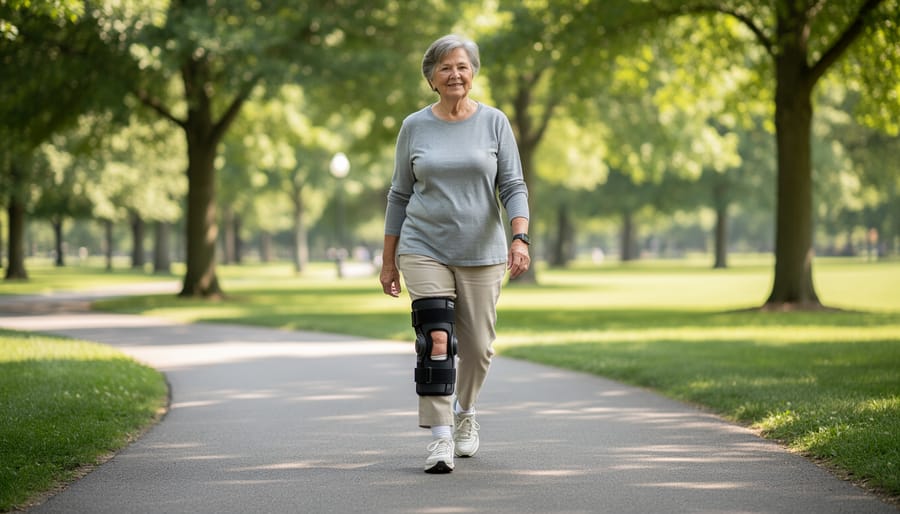
How Movement Reduces Inflammation and Stiffness
When you move your joints regularly, even gently, you trigger a cascade of anti-inflammatory responses in your body. Physical activity stimulates circulation, which helps flush inflammatory cytokines from joint spaces and delivers fresh oxygen and nutrients to damaged tissues. Studies consistently show that exercise reduces inflammation markers like C-reactive protein and interleukin-6 in people with rheumatoid arthritis.
Movement also addresses one of RA’s most frustrating symptoms: morning stiffness. During sleep, synovial fluid, the natural lubricant in your joints, thickens and becomes less effective. Gentle activity warms this fluid, making it more viscous and allowing your joints to glide smoothly again. That’s why many people with RA notice their stiffness eases after 10 to 15 minutes of light movement.
Regular activity creates a positive feedback loop. As you move consistently, your body adapts by producing more lubricating fluid and strengthening the tissues around your joints, which further reduces inflammation over time. This isn’t about pushing through pain, it’s about working with your body’s natural healing mechanisms through sustained, manageable movement.
Building Strength Without Stressing Joints
When you strengthen the muscles around your joints, you’re creating a natural support system that takes pressure off already-inflamed tissue. Think of these muscles as shock absorbers, the stronger they are, the less impact and stress your joints endure during everyday movements like climbing stairs, lifting objects, or simply walking across a room.
Regular, gentle movement triggers muscle fibers to adapt and grow stronger without requiring heavy weights or high-impact exercises. Even low-resistance activities build the muscle endurance needed to stabilize joints during daily tasks. This increased stability means less wobble and misalignment, which directly reduces the grinding and irritation that can worsen RA symptoms. Research confirms that exercise therapy improves symptoms and functional capacity in rheumatoid arthritis patients.
The key is choosing movements that recruit muscles without forcing joints through painful ranges. Walking naturally engages leg muscles while keeping impact minimal. When your quadriceps, hamstrings, and calf muscles are conditioned, your knees track properly and absorb forces that would otherwise strain the joint capsule. Similarly, strengthening core and hip muscles stabilizes your pelvis and spine, reducing compensatory stress on ankles and shoulders.
This protective effect compounds over time, as muscles grow stronger, you can move more confidently, which encourages further activity and creates a positive cycle of improved strength and reduced joint burden.
What You Need Before You Start
Starting a physical activity routine with rheumatoid arthritis requires minimal investment, but the right preparation makes all the difference between success and frustration. You don’t need expensive gym memberships or specialized equipment, but you do need a few essentials and clearances that protect your joints while you build strength and mobility.
First and most important: talk with your rheumatologist or a physical therapist familiar with RA before beginning any new exercise program. They understand your disease activity level, current medications, and joint condition well enough to recommend starting intensity and flag any movement restrictions specific to your situation. Some patients need modifications for hands, wrists, feet, or other affected areas, and your healthcare team can guide those adaptations from the start.
Once cleared to begin, gather these essentials:
- Medical clearance from your rheumatologist or physical therapist confirming you can safely start activity
- Supportive walking shoes with cushioned soles and proper arch support to reduce joint impact
- Activity journal or tracking app to record duration, symptoms, and progress over time
- Baseline assessment of current pain levels and range of motion for comparison later
- Emergency contact plan including your doctor’s number and a walking companion if possible
For footwear, choose walking shoes designed for your foot type rather than fashion. The right shoes absorb shock that would otherwise stress inflamed ankles, knees, and hips. Replace them every 300 to 500 miles or when the tread wears thin.
Wear comfortable, breathable clothing that moves with you and doesn’t restrict joints. Layers work well since you may warm up during activity but feel chilled afterward. If you experience hand or wrist involvement, consider fingerless compression gloves that provide support without limiting dexterity.
Some people benefit from assistive devices such as a cane for stability or braces for extra joint support during walks. There is no shame in using aids that let you move safely and confidently. Keep basic pain management supplies accessible too, whether that means ice packs for post-activity inflammation or topical creams your doctor recommends. The goal is removing barriers so you can focus on building a sustainable routine that genuinely helps your RA.
Important Safety Warnings and When to Stop
Starting any physical activity routine with rheumatoid arthritis requires you to become familiar with your body’s signals, what’s normal discomfort versus what’s a genuine warning sign. While movement generally helps RA, there are clear boundaries that tell you when to pause, adjust, or stop entirely.
Sharp or sudden joint pain is your body’s alarm system. Unlike the dull ache of stiffness easing or the gentle pull of muscles warming up, sharp pain signals that you’re stressing an inflamed joint beyond its current capacity. If a joint suddenly hurts more intensely during or after activity, stop immediately and rest. The same applies to significant new swelling, joints that become noticeably puffier, warmer to touch, or more restricted after exercise need recovery time, not more movement.
Understanding the difference between productive discomfort and harmful stress takes practice. Expected muscle fatigue feels like a gentle tiredness in the muscles themselves, your thighs might feel worked after a walk, which is normal. Dangerous joint stress, however, centers on the joint itself, feels sharper or burning, and often worsens with continued movement. A helpful rule: if pain increases as you move, stop. If mild stiffness decreases as you warm up, you can usually continue.
During an RA flare, when multiple joints are actively inflamed and you’re experiencing increased fatigue or fever, your exercise approach needs to shift. Full rest isn’t always necessary, but scale back significantly. A 20-minute walk might become a 5-minute gentle stroll, or you might substitute with simple range-of-motion stretches done while seated. Never push through a flare trying to maintain your usual routine, this can prolong inflammation and delay recovery.
Medication timing matters for many people with RA. Some find their joints respond better to activity about an hour after taking morning medications, when anti-inflammatory effects are peaking and stiffness has eased. Others do best in the afternoon when their bodies have naturally loosened up. Experiment to find your optimal window, and communicate with your rheumatologist about whether adjusting medication timing could support your activity goals. Your safety depends on listening to your body’s specific signals, not powering through warning signs in the name of consistency.
How to Start Walking with Rheumatoid Arthritis: Step-by-Step
Preparing Your Body and Joints
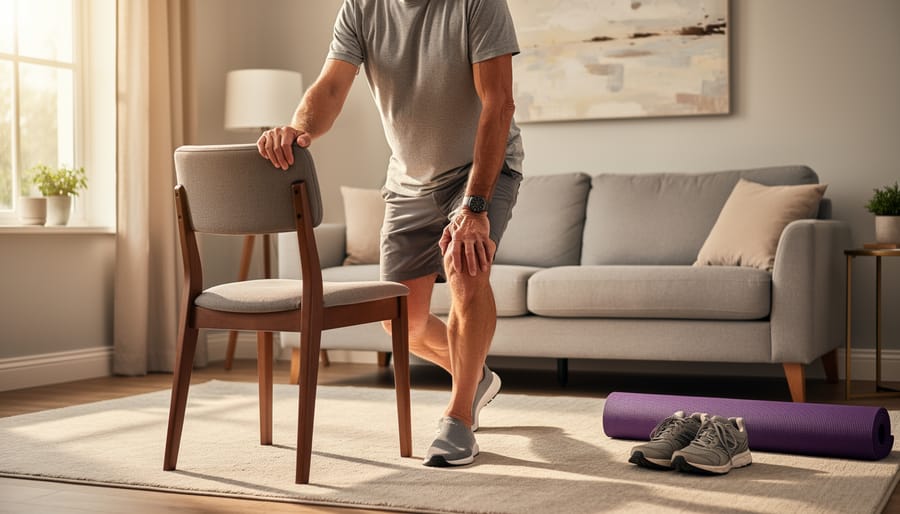
Before you take your first step, spend five minutes preparing your joints with gentle movement. This warm-up reduces stiffness and signals your body that activity is coming, making your walk safer and more comfortable.
Start with your ankles while seated. Circle each foot slowly in both directions, then flex your toes up toward your shin and point them down, ten repetitions of each movement. This loosens the ankle joints that bear your weight during walking.
Move to your knees next. While still seated, straighten one leg and hold for three seconds, then lower it. Repeat ten times per leg. This simple motion lubricates the knee joint without forcing it through painful ranges.
For your hips, stand and hold a sturdy surface for balance. Gently swing one leg forward and back ten times, keeping the movement small and controlled. Switch legs. Then swing each leg side to side ten times. These motions prepare the hip joints for the rotational movements of walking.
Finish with your arms and shoulders. Make ten small circles with your arms, gradually increasing the size. This matters because natural arm swing during walking involves your entire upper body, and cold, stiff shoulders can throw off your gait and stress your lower joints.
Each movement should feel easy, never forced. You are warming up, not stretching to your limit.
Your First Walks: What to Expect
Your first walking session with rheumatoid arthritis will likely feel different than you expect. During the first five to ten minutes, your joints may feel stiff and slightly uncomfortable, this is completely normal. As you continue moving, that stiffness typically eases, and walking becomes more comfortable. Think of it as your joints warming up, similar to how a car engine runs smoother after a few minutes.
You should feel mild muscle effort in your legs and possibly some fatigue, which signals you’re working your body appropriately. What you shouldn’t feel is sharp, stabbing pain in any joint, sudden swelling, or pain that worsens as you walk. If these warning signs appear, stop immediately and rest.
For gauging intensity, use the talk test: you should be able to hold a conversation while walking without gasping for breath. If you’re too winded to speak comfortably, slow down. Your pace doesn’t need to be brisk, a casual, comfortable speed is perfect for managing rheumatoid arthritis through physical activity.
After finishing, expect some mild tiredness, but you should feel better overall, not worse. If pain lingers more than two hours post-walk or you notice increased joint swelling, your next session needs to be shorter or slower.
Building Up Gradually and Safely
Progress slowly and with intention. Increase your walking time by just one to two minutes per week, when you can complete your current duration feeling energized rather than exhausted, you’re ready. Your body with rheumatoid arthritis needs gradual adaptation, not ambitious leaps that trigger inflammation.
During flare-ups, don’t abandon physical activity entirely. Instead, scale back to half your usual duration or switch to gentle range-of-motion exercises at home. Think of flares as temporary detours, not roadblocks. Resume your regular walking routine once symptoms settle, starting at 70% of where you were before the flare.
Consistency matters more than perfection. Aim for five days weekly rather than pushing for seven, which builds rest into your schedule naturally. If you miss a few days, simply start again at your previous comfortable level, don’t try to “make up” for lost time by doubling your next walk.
Track both good and challenging days in a simple log. Patterns emerge quickly: perhaps you walk better after morning medication, or Tuesdays after physical therapy. Use these insights to schedule physical activity when your body responds best, creating a sustainable routine that respects your rheumatoid arthritis rather than fighting against it.
Beyond Walking: Other Rheumatoid Arthritis-Friendly Activities

Walking builds the foundation, but expanding into other gentle activities gives your joints variety and targets different aspects of rheumatoid arthritis management. Each activity offers unique benefits while maintaining the low-impact principle that protects inflamed joints.
Water-based exercise stands out as one of the most forgiving options for RA. When you’re submerged in water, buoyancy supports your body weight and reduces stress on weight-bearing joints by up to 90%. Swimming laps, water walking, or aqua aerobics classes let you move through a full range of motion with minimal pain. The water’s resistance also provides natural strength training without the joint compression of traditional weights. Warm pools (around 84-88°F) offer additional therapeutic benefit by soothing stiff joints. Just be cautious getting in and out of the pool, wet surfaces can be slippery, and transitioning from water support to full weight-bearing requires careful movement.
Stationary cycling delivers cardiovascular conditioning without the impact of walking or running. The circular pedaling motion keeps joints mobile while building leg strength and endurance. Start with minimal resistance and shorter sessions, gradually increasing as your tolerance improves. Recumbent bikes provide extra back support if hip or spine involvement makes upright positions uncomfortable.
Several activities blend movement with mindfulness:
- Water exercise: buoyancy reduces joint load by up to 90% while providing gentle resistance
- Cycling: non-impact cardiovascular conditioning that maintains joint mobility
- Tai chi: slow, flowing movements improve balance, flexibility, and mental calm
- Gentle yoga: modified poses build strength and range of motion without forcing joints
- Resistance training: light weights or bands strengthen muscles and support bone density
Tai chi’s deliberate, flowing movements improve balance and reduce fall risk while gently working joints through their range. Many community centers now offer arthritis-specific tai chi programs. Yoga adapted for arthritis uses props like blocks, straps, and chairs to make poses accessible. Avoid extreme positions or inversions that stress wrists and hands, which are often affected by RA.
Strength training with light resistance bands or 1-3 pound weights builds the muscle support your joints need. Focus on controlled movements rather than heavy loads. Two sessions per week targeting major muscle groups helps maintain bone density and functional strength. Always stop if you feel sharp joint pain, muscle fatigue is expected, but joint stress is not.
Stretching routines maintain flexibility and counter the tightening effects of inflammation. Hold gentle stretches for 15-30 seconds without bouncing, working within comfortable limits rather than pushing through pain.
How to Know If Your Routine Is Working
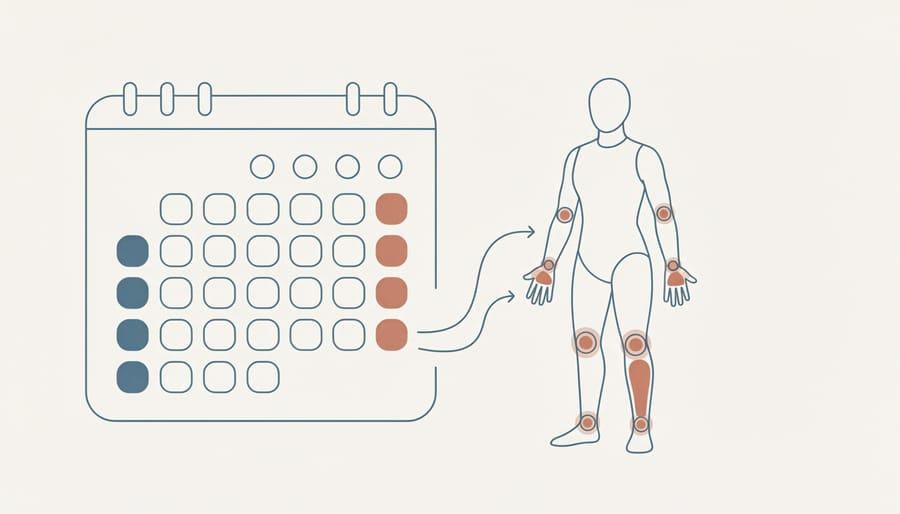
Monitoring your progress helps you understand whether your activity plan supports your health or needs adjustment. Start by keeping a simple activity and symptom journal, jot down what you did, how long you moved, and how your joints felt during and several hours afterward. This record reveals patterns that memory alone often misses.
Track specific markers that reflect improvement. Note how long morning stiffness lasts each day; many people see this duration shrink within the first few weeks of consistent movement. Measure your energy levels throughout the day and whether you’re sleeping better. Pay attention to daily tasks that become easier, opening jars, climbing stairs, getting dressed, these functional improvements often appear before you notice changes in pain levels.
Range of motion matters too. Once a week, gently test how far you can move each affected joint without forcing it. Can you reach a bit higher? Bend your knees more comfortably? These small gains add up. Quality of life indicators like mood, social participation, and confidence in managing your condition are equally important measures of success.
How soon will I see improvements?
Some benefits appear immediately, better mood and reduced stiffness right after a walk are common. Measurable changes in strength, endurance, and overall symptom control typically emerge after 6-8 weeks of consistent activity.
What if pain increases after I exercise?
Mild muscle soreness is normal, but joint pain that lasts more than two hours after activity or worsens the next day signals you’ve done too much. Scale back duration or intensity until you find a comfortable level.
Should I work with a physical therapist?
A physical therapist experienced with rheumatoid arthritis can design a personalized program, teach proper form, and help you progress safely. This guidance is especially valuable when you’re starting out or managing multiple joint issues.
How much activity is enough?
Most experts recommend working up to 150 minutes of moderate activity weekly, but any consistent movement helps. Even 10 minutes daily provides meaningful benefits for people with RA.
If you notice increased swelling, persistent pain that doesn’t improve with rest, or declining function despite regular activity, consult your rheumatologist or physical therapist. They can help modify your routine or check whether your RA treatment plan needs adjustment. Progress isn’t always linear, setbacks during flares are normal and don’t mean your program has failed. The goal is finding a sustainable rhythm that supports your joints while building strength and confidence over time.
Your Next Steps: Building a Sustainable Activity Plan
You have the tools and knowledge to start moving safely with rheumatoid arthritis. Now it’s time to build a plan that lasts.
Start by writing down one specific goal that matters to you. Maybe it’s walking around your neighborhood three times a week, or getting through your morning routine with less stiffness. Make it concrete and achievable within the next month. Vague goals like “exercise more” rarely stick, but “walk for ten minutes every Monday, Wednesday, and Friday before lunch” gives you a clear target.
Schedule your activity like any other important appointment. Look at your week and identify the times when your joints typically feel best. Block out those slots in your calendar and protect them. If mornings work better because your medication has kicked in, claim that time. If evenings suit your energy levels, reserve them for movement.
You don’t have to do this alone. A walking partner makes you accountable and turns exercise into social time. Online communities specifically for people with rheumatoid arthritis offer encouragement from others who understand your challenges. Keep your rheumatologist and physical therapist in the loop about your activity plan so they can adjust medications or techniques as needed.
Plan for the reality of living with RA. During flares, have a backup routine ready, maybe gentle stretches or seated exercises that keep you moving without aggravating inflamed joints. When weather limits outdoor walking, know your indoor alternatives. Flexibility in your plan prevents frustration.
Track your wins, no matter how small. Walked five minutes longer than last week? That’s progress worth noting. Consistency beats intensity every time. Moving a little bit most days does far more for your rheumatoid arthritis than occasional intense sessions followed by long breaks.
Your journey with physical activity and rheumatoid arthritis is uniquely yours. Share what works with others in the arthritis community. You might inspire someone else to take their first steps.